1 When you arrive
On arrival, you’ll be signed in and introduced to the smith who will talk through the course step-by-step and help you select which design you would like to make. We’ll discuss what you want to achieve for the day before providing you with protective equipment and a safety briefing.
2 Firing up the forge
The forge will have been lit and heating up before you arrive, so it’s ready to go! You will get an introduction on how to control and maintain the fire of the forge to a forging heat.
3 Forging the Blade
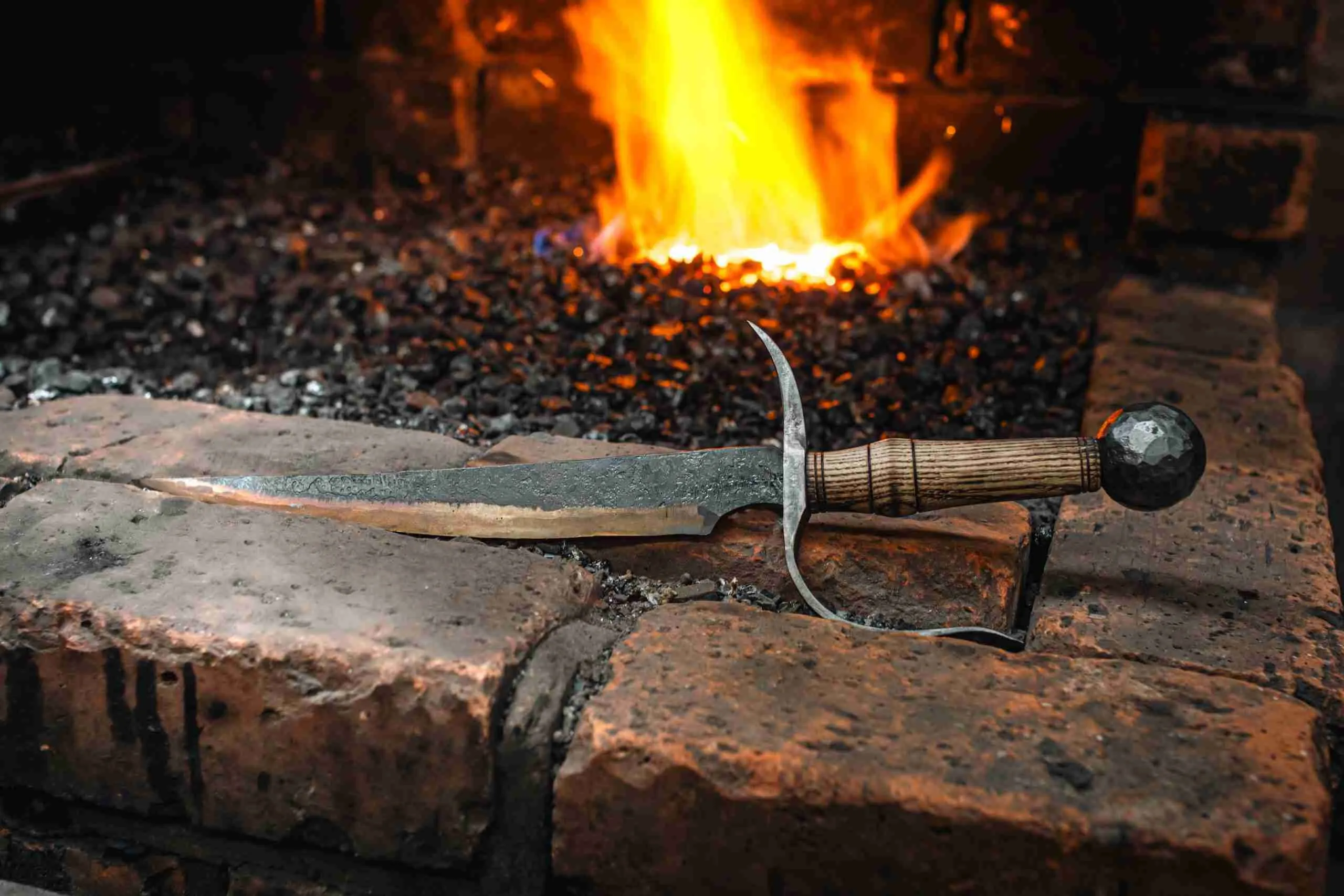
You will start with forging the blade, beginning with the tang with processes such as set downs, squaring and tapering. On to the business end of the dagger, you will forge the taper onto the blade and bevel the blade, then it’s onto the pommel and cross guard.
4 Forging the Pommel and Crossguard
The pommel is the counterweight to balance the dagger. In forging the pommel, you will be shaping steel using formers and hammers to decorate the pommel. For the cross guard, you will punch a hole in the crossguard and use a process called drifting to fit the crossguard to the tang. You will then begin to shape and decorate your crossguard through a number of processes such as tapering, rounding, splatting and scrolling to give your dagger extra flair.
5 Finishing
Onto the grinding bay to use tools such as angle grinders and belt grinders. Then you will fit the handle to the dagger through a process known as a burn through here the tang is heated and the wooden handle is then pushed onto the tang to burn away a hole that fits the tang, once the handle is fitted, it is time for final assembly one of our smiths will fit all the components together.
6 Photo Time
It’s great fun working alongside one another and crafting something unique! Once the forging is complete, it’s time to pose for those all-important photos at our wooden stage!